Three Key Control Points for Efficient Milling of Stainless Steel Parts: A Practical Guide for Export Clients
19 12,2025
Tutorial Guide
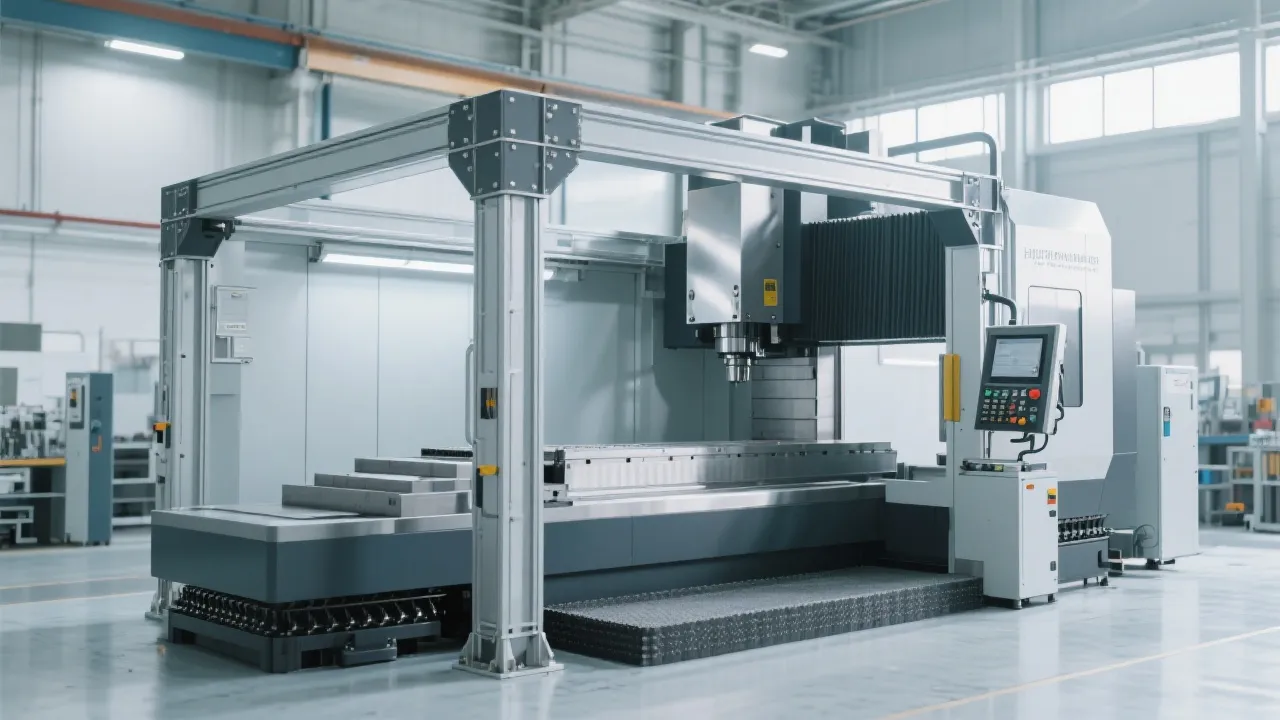
This article addresses common challenges in stainless steel machining such as unstable precision, low efficiency, and rapid tool wear. It explores how the Kaibo CNC GJ1417 gantry CNC milling machine achieves high-efficiency and stable milling of complex parts through three core control points: robust structural design, optimized cutting parameters, and precision control system synergy. Featuring real-world applications in mold manufacturing and automotive components, it offers practical technical guidance and equipment selection advice tailored for overseas hardware manufacturing clients, enhancing production consistency and delivery capabilities.
Three Critical Control Points for High-Efficiency Milling of Stainless Steel Parts
Manufacturing high-precision stainless steel components presents notable challenges such as unstable tolerances, low machining efficiency, and rapid tool wear. These pain points are highly prevalent in sectors like mold making and automotive parts production, where material toughness and dimensional accuracy are paramount. Leveraging the advanced capabilities of the Kaibo CNC GJ1417 Gantry CNC Milling Machine, manufacturers can overcome these challenges by focusing on three core control points:
- Robust Machine Structural Rigidity
- Optimized Cutting Parameters for Stainless Steel
- Precision Control System Integration
1. Robust Machine Structural Rigidity
The foundation of efficient stainless steel milling is a machine with exceptional rigidity to minimize vibrations and deflections during heavy cutting loads. The GJ1417 model achieves this through a gantry-type frame featuring:
- Precision-machined thickened cast iron bed ensuring long-term structural stability
- High-tension ball screws with preloaded nuts for backlash elimination
- Wide guideways with hardened surfaces to reduce friction and wear
These design choices enable the machine to withstand cutting forces exceeding 12,000 N without compromising positional accuracy (repeatability within ±0.005 mm), resulting in stable machining of complex stainless components.
2. Optimized Cutting Parameters for Stainless Steel
Stainless steel’s work-hardening tendency requires meticulously tuned cutting parameters to reduce thermal stress and tool wear. Kaibo’s GJ1417 supports tailored milling strategies including:
- Reduced Cutting Speed: Operating between 40–80 m/min, optimized per alloy grade
- Increased Feed Rate: Higher feed rates (up to 0.1 mm/tooth) to minimize chip thickness and heat accumulation
- High-Pressure Coolant Systems: To efficiently evacuate chips and stabilize tool temperature
Implementing these parameters has been shown to extend tool lifespan by up to 30%, while improving surface finish quality and reducing cycle times by as much as 20%, based on comparative trials with traditional milling setups.
3. Precision Control System Integration
The third critical component is the synergy of the machine's control system with hardware capabilities. The GJ1417 is equipped with:
- Advanced CNC Controller: Supporting multi-axis interpolation with sub-micron resolution
- Real-Time Monitoring: Vibration sensors and load feedback enable adaptive feedrate adjustments
- Comprehensive Diagnostic Software: Facilitates predictive maintenance and reduces unplanned downtime
Collectively, these features ensure consistent machining precision, even in batch productions of complex geometries where dimensional tolerances are often within ±0.01 mm.
Practical Applications in Mold and Automotive Industry
Real-world application validates GJ1417’s capabilities. For example:
- Mold Manufacturing: Achieved stable batch production with dimensional deviations consistently under 0.008 mm, reducing scrap rates by 15%.
- Automotive Component Milling: Enabled precision milling of stainless steel engine brackets with complex contours, increasing throughput by 25% without compromising surface integrity.
These successes stem from combining the machine's core design with operator training on parameter tuning and routine maintenance, emphasizing holistic process optimization.
Operation and Maintenance Recommendations
To maintain peak GJ1417 performance over production cycles:
- Adhere to detailed daily lubrication schedules based on operating hours
- Conduct vibration and backlash inspections bi-weekly via onboard diagnostics
- Train machine operators regularly on tool path optimization and adaptive milling techniques
These practices reduce unplanned downtime by approximately 20% and extend overall machine life by several years.




 <#else>


