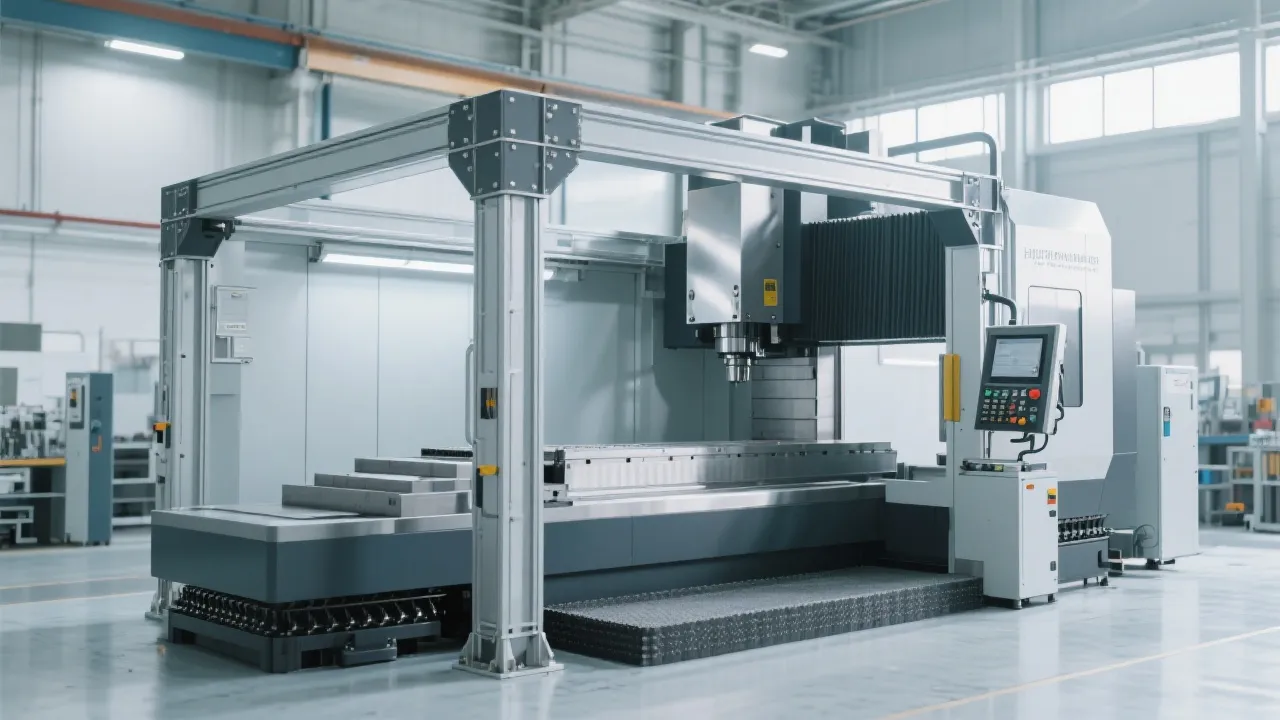
In today’s competitive manufacturing landscape, especially in the automotive, mold-making, and heavy machinery sectors, companies are under constant pressure to improve production efficiency while maintaining tight tolerances. Traditional milling machines often fall short—especially when handling difficult-to-cut materials like stainless steel or titanium alloys. That’s where the Kaibao GJ1417 heavy-duty gantry CNC miller comes in.
| Feature | Traditional Milling Machine | Kaibao GJ1417 (Gantry Type) |
|---|---|---|
| Positioning Accuracy | ±0.03 mm | ±0.01 mm |
| Repeatability | ±0.015 mm | ±0.005 mm |
| Max Workpiece Size | 1,200 x 800 mm | 1,700 x 1,200 mm |
| Material Adaptability | Mild Steel Only | Stainless Steel, Aluminum, Titanium, Cast Iron |
| Maintenance Frequency | Every 3 months | Every 6–9 months |
The GJ1417 isn’t just an upgrade—it’s a strategic shift. With ISO9001 certification and over 70 factory tests per unit before shipping, this machine delivers consistent performance across high-volume runs. For example, one European auto parts supplier reported a 40% reduction in scrap rate after switching from conventional mills to the GJ1417 for machining stainless steel components.
In mold manufacturing, the GJ1417 handles complex cavity designs with minimal vibration due to its cast iron frame and rigid column structure. In the automotive sector, it processes engine blocks and transmission cases at speeds up to 20% faster than older models—without sacrificing surface finish quality.
For mechanical structure parts such as gearboxes and frames, the machine’s ability to maintain accuracy over long cutting cycles ensures that even large batches meet strict GD&T standards—a key concern for engineers managing lean production lines.
Before investing, ask yourself:
If your operation exceeds 100 pieces/month of medium-to-heavy-duty components, the GJ1417 offers a clear ROI within 12–18 months through reduced downtime, fewer rejects, and lower labor costs per unit.
Get a tailored configuration plan based on your current workflow and material specs.
Download Free “Heavy-Duty CNC Milling Machine Selection Handbook”