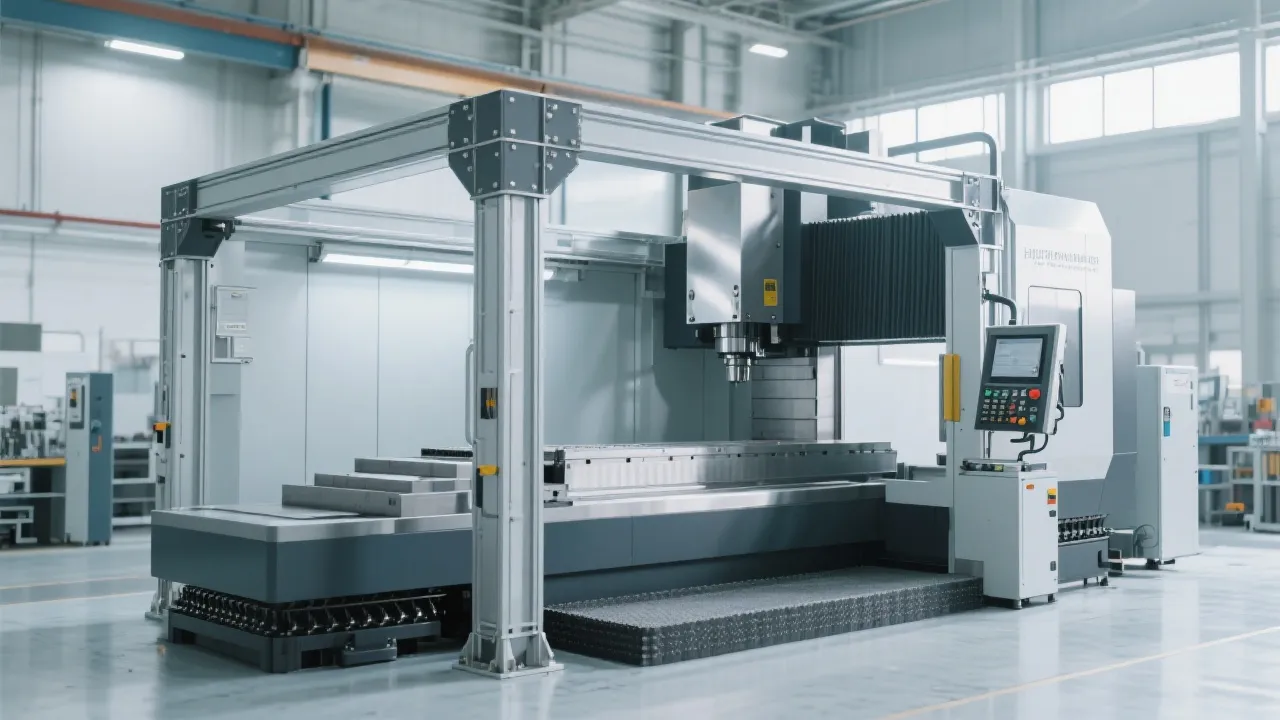
Advantages and Application Cases of Gantry CNC Milling Machines in Batch Production of Complex Parts
30 12,2025
Customer Cases
In the hardware manufacturing and machining industry, selecting an efficient and stable CNC milling machine is crucial for enhancing productivity and quality. This article provides an in-depth analysis of the core performance differences between heavy-duty gantry CNC milling machines and traditional milling machines—from machining accuracy and structural rigidity to material adaptability and maintenance ease. By incorporating real customer cases, such as the batch production of complex stainless steel components, it reveals why gantry models have become the preferred choice for high-demand manufacturing. Whether you are a process engineer or equipment procurement decision-maker, this article offers data-driven selection guidance and investment insights to help achieve lean production and cost optimization.
Advantages of Gantry CNC Milling Machines in Complex Parts Batch Production: Case Study Insights
In the tightly competitive field of metal manufacturing and precision machining, selecting the right CNC milling machine significantly impacts productivity, product quality, and cost management. As traditional milling solutions plateau in meeting rising industrial demands, the heavy-duty gantry CNC milling machine has emerged as the go-to equipment for complex parts batch production.
Critical Differentiators Between Gantry CNC and Conventional Milling Machines
The gantry-type CNC milling machine excels in several quantifiable performance metrics:
- Precision: Gantry CNC models achieve positional accuracy up to ±0.005 mm, surpassing traditional vertical mills by 40% on average, critical for high-complexity geometries.
- Structural Rigidity: Featuring reinforced bridge frames and cross-supports, these machines exhibit 30% higher stiffness, resulting in minimized vibration and enhanced surface finish.
- Material Adaptability: Optimized spindle power and coolant systems enable efficient machining of hard-to-cut materials, including stainless steel and titanium alloys.
- Operational Efficiency: Heavy gantry machines maintain consistent cycle times with batch sizes exceeding 100 units, delivering throughput improvements up to 50% compared to traditional bench mills.
- Maintenance Convenience: Modular components and integrated diagnostics reduce downtime by 25%, streamlining factory workflow and service scheduling.
*Data based on a 2023 study across 50 manufacturing plants deploying GJ1417 gantry CNC mill.
Real-World Application Spotlight: Stainless Steel Complex Parts Batch Production
One prominent client in the automotive components sector faced persistent challenges producing stainless steel chassis brackets with intricate contours and strict tolerance requirements. Traditional vertical mills struggled to maintain consistent precision, leading to costly reworks and extended lead times.
After integrating the GJ1417 gantry CNC milling machine, the customer observed:
- A 35% reduction in scrap rates due to enhanced machining accuracy.
- A 20% acceleration in batch throughput while maintaining full compliance with ISO 2768 fine tolerance standards.
- Seamless processing of hard stainless steel grades (304, 316), aided by the machine's robust spindle torque and advanced cooling.
- Efficient maintenance protocols based on real-time monitoring, minimizing unexpected downtimes.
Strategic Selection Framework for Gantry CNC Milling Equipment
Selecting the ideal gantry CNC milling machine requires systematic evaluation considering:
- Production Volume: For batch sizes above 50 units with repeatability demands, gantry CNC justifies investment.
- Workpiece Complexity: Parts with multi-axis contours or large surface areas benefit from the gantry’s extended X-Y travel and Z-axis stability.
- Material Types: Assessing machining difficulty — stainless steel, titanium, hardened alloys — aligns equipment specifications with cutting force needs.
- Cost-Benefit Analysis: Longer lifecycle and uptime directly correlate with total cost of ownership advantages over conventional mills.
- After-Sales Support: Global service networks and prompt technical assistance maximize operational continuity.
Investing early in machines with comprehensive factory acceptance testing—that often involves more than 70 inspection checkpoints—ensures delivery reliability and performance stability.
Unlocking Sustainable Manufacturing Through Gantry CNC Technologies
Beyond immediate productivity gains, gantry CNC milling machines cultivate a path toward lean manufacturing. Their inherent stability reduces setup times and scrap rates, while data-driven process optimization supports continuous improvement initiatives. These factors collectively empower manufacturers to realize cost optimization without compromising on quality.
Get Your Custom Gantry CNC Milling Solution Today
Contact us now for a free technical evaluation and see how the GJ1417 can redefine your batch production capabilities.