Optimizing Stainless Steel Milling with Heavy-Duty CNC Gantry Milling Machines
14 12,2025
Tutorial Guide
This article explores the application advantages and technical features of the Kaibo CNC GJ1417 heavy-duty gantry CNC milling machine in the hardware manufacturing industry, focusing on stainless steel processing. It analyzes the benefits of its oversized worktable design, high-rigidity mechanical structure, and optimized cutting strategies for challenging materials. Combined with precise control for complex parts, the machine enables efficient milling and large-scale production. Additionally, the article discusses quality management certifications and global service support to help users fully leverage the equipment to enhance processing workflows, improve productivity, and ensure product quality. Practical operation, maintenance recommendations, and employee training insights are also provided, delivering a comprehensive, reliable metal processing solution for manufacturing enterprises.
Heavy-Duty CNC Milling Solutions: Maximizing Efficiency in Stainless Steel Machining
In the evolving landscape of metal manufacturing, achieving precision and efficiency in stainless steel machining remains a key challenge. Heavy-duty CNC gantry milling machines, such as the Kaibo CNC GJ1417, have revolutionized production by merging robust mechanical design with advanced cutting strategies tailored for difficult-to-machine materials. This article delves deep into leveraging the power of such equipment to elevate manufacturing quality and throughput, especially within the metal hardware industry.
Understanding the Technical Challenges of Stainless Steel Machining
Stainless steel’s inherent toughness and work-hardening tendencies create difficulties in machining processes. Key hurdles include:
- Rapid tool wear due to abrasive material qualities
- Thermal distortion affecting dimensional accuracy
- Vibrations compromising surface finish
- Complex geometrical requirements for precision components
Addressing these issues demands equipment with superior rigidity, optimized workholding, and intelligent tooling strategies.
Kaibo CNC GJ1417: Core Technological Advantages
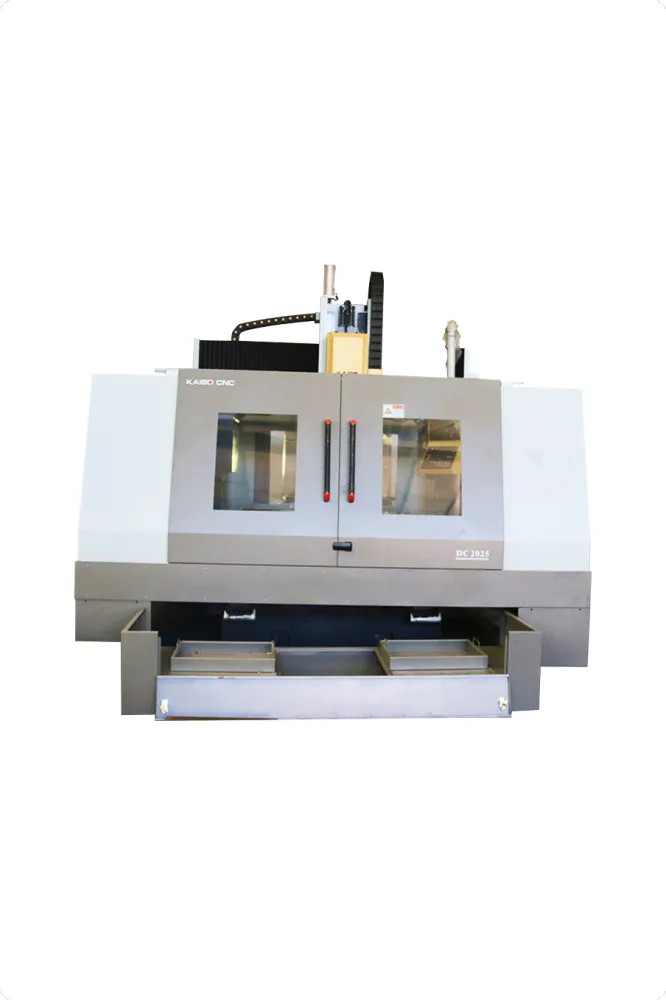
The GJ1417 model stands out with features engineered to tackle these challenges head-on:
- Extra-large Worktable (1400mm x 1700mm): Enables secure and flexible clamping of large or multiple workpieces for batch production, minimizing setup time and maximizing throughput.
- High-Rigidity Gantry Structure: Constructed with heavy-duty cast iron and stabilized by finite element analysis to reduce deformation under heavy cutting loads, ensuring consistent machining precision within ±0.02 mm.
- Advanced Cutting Strategies: Integration of adaptive feed rates and variable spindle speeds optimized for stainless steel, reducing thermal-induced stresses and extending tool life by up to 30% compared to conventional machining.
- Multi-Axis Control & Precision Feedback Systems: Real-time compensation for tool wear and position errors supports complex geometries found in automotive molds and intricate metal components.
These aspects collectively empower manufacturers to efficiently produce high-precision parts with superior surface finishes, critical for demanding applications.
Typical Application Scenarios in Metal Hardware Manufacturing
Practical implementations of the GJ1417 CNC milling machine include:
- Automotive Parts Production: Efficient milling of stainless steel engine components, brackets, and mold inserts with tight tolerances and excellent repeatability.
- Precision Tool & Die Making: Creation of molds with complex contours, where dimensional stability is critical for downstream injection molding or stamping processes.
- Industrial Equipment Components: Batch processing of heavy stainless steel frames and housings with optimized cycle times and uniform quality.
The GJ1417’s versatility in handling both small and large workpieces enables broad applicability across diverse sectors within the five-metal manufacturing domain.
Quality Assurance and Global Support Services
Adherence to international quality management standards (e.g., ISO 9001) underpins the GJ1417’s manufacturing and assembly process, guaranteeing machine reliability and long-term stability. Coupled with a global after-sales service network offering timely technical support, spare parts supply, and operator training, users gain trust in operational continuity and performance.
Operational Best Practices and Maintenance Recommendations
To maximize the life cycle and performance of the GJ1417 in stainless steel milling:
- Implement regular calibration and spindle alignment checks every 500 operating hours.
- Use coolant systems combined with optimized cutting speeds to prevent thermal distortion.
- Train operators on adaptive machining parameters and tool-change protocols to reduce downtime.
- Employ condition-based maintenance via integrated sensors to foresee component wear.
These proactive measures support sustained machining accuracy and efficient production cycles.




 <#else>


