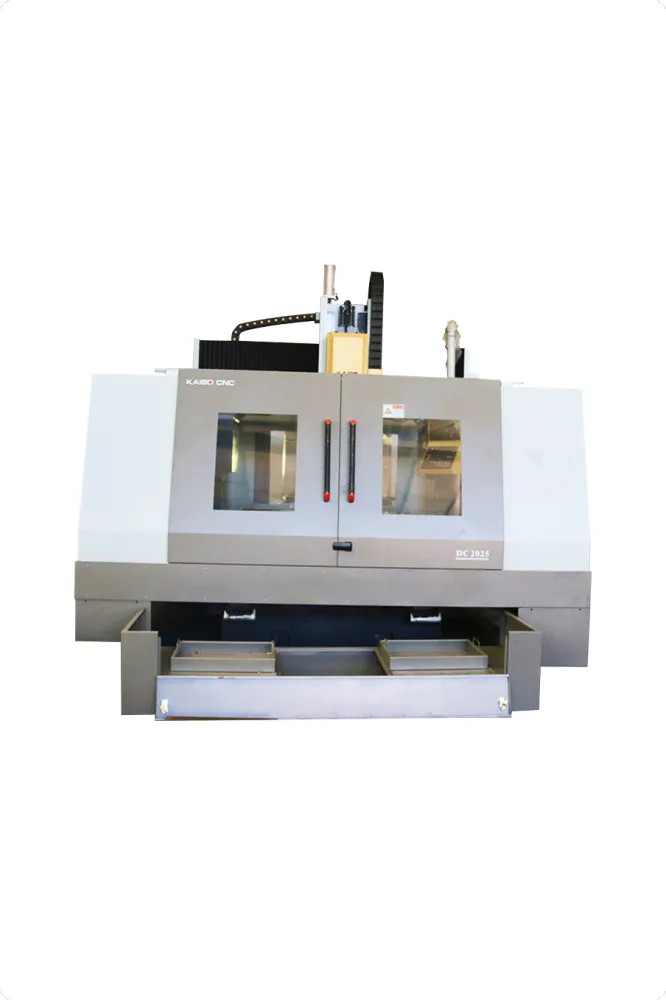
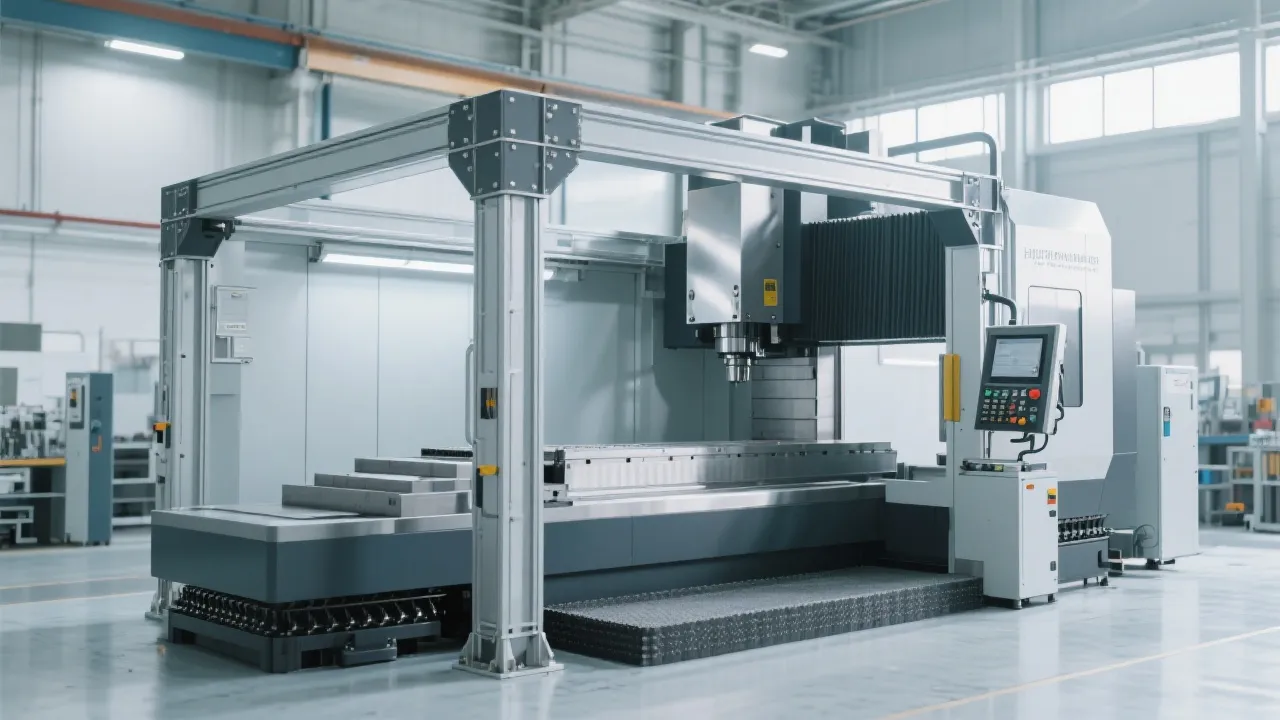
For manufacturing professionals tasked with boosting mechanical processing output, choosing the right equipment is pivotal. The heavy-duty gantry milling machine, exemplified by the Kaibo CNC GJ1417 model, offers transformative advantages over traditional milling setups. By examining key performance parameters—precision, rigidity, efficiency, material adaptability, and maintenance ease—this guide empowers you to make data-driven, cost-effective investment decisions tailored to your factory’s unique needs.
Achieving tight manufacturing tolerances is non-negotiable in industries like automotive and mold making. The Kaibo GJ1417 achieves positioning accuracy within ±0.01 mm, a significant leap compared to the typical ±0.03 mm range found in many traditional milling machines. This enhanced precision reduces scrap rates and post-processing time, directly elevating output quality.
The heavy-duty gantry design features integral casting and precision linear guideways, markedly improving stiffness under cutting loads. This structural robustness minimizes vibration and deflection during tough milling operations—especially with hard-to-machine materials like stainless steel and titanium alloys—resulting in smoother surfaces and longer tool life.
Production throughput depends on cycle time and machine uptime. Thanks to optimized servo drives and rigid frameworks, the GJ1417 can boost unit output by 30% to 50% compared to legacy machines. Coupled with intelligent operational diagnostics, downtime is reduced, allowing you to reliably meet higher order volumes without sacrificing quality.
Specialized components and optimized cutting parameters make the GJ1417 especially adept at handling difficult materials such as stainless steel and titanium alloys. In automotive parts production and complex mold fabrication, this adaptability translates into fewer tool changes and consistent performance on demanding geometries.
Modular machine architecture combined with a smart diagnostic system streamlines maintenance workflows, reducing technician intervention times by approximately 25%. This ensures sustained precision and productivity over the equipment’s lifecycle, optimizing return on investment.
To maximize impact, evaluate these parameters relevant to your operation:
Remember, an upfront investment in a high-precision, rigid gantry milling machine like the GJ1417 mitigates quality risks and operational bottlenecks, translating to sustained savings and stable production flow.