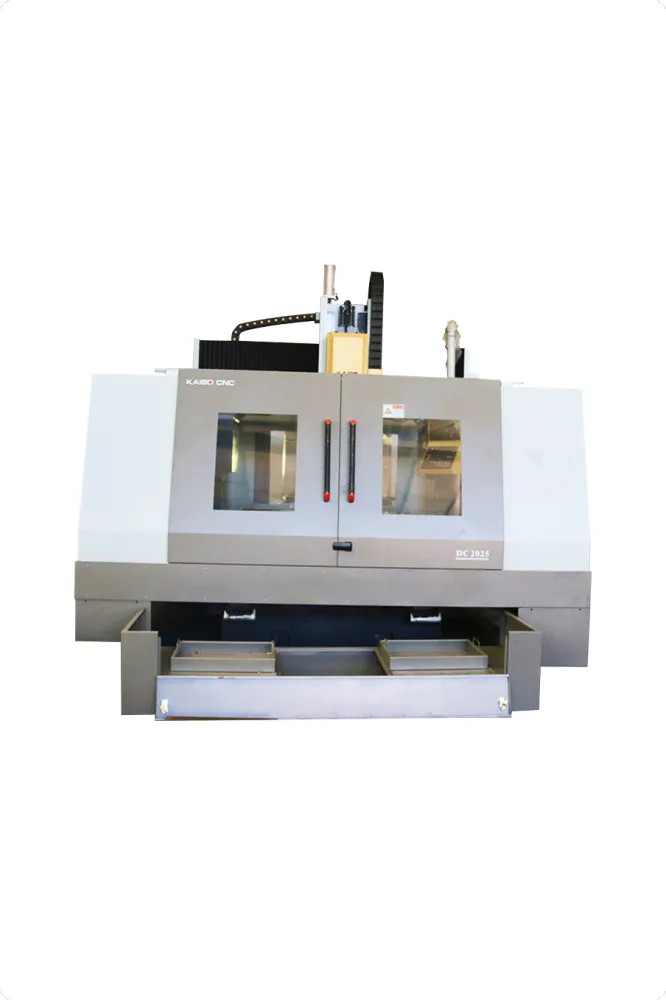
In the global market of industrial equipment, the ISO9001 Quality Management System Certification is not just an entry - level requirement but a core guarantee for the long - term stable operation of Kaibo CNC's GJ1417 gantry milling machine. This article delves into how this certification ensures the consistency and high efficiency of the equipment in complex part machining through standardized processes and over 70 factory inspections.
The ISO9001 certification sets a series of strict standards for the production of CNC milling machines. From the design stage, the standards define the technical parameters and performance requirements of the equipment. For example, in the design of the GJ1417 gantry milling machine, the standards specify the requirements for the mechanical structure, control system, and electrical system to ensure its stability and reliability.
During the production process, every step is strictly controlled according to the ISO9001 standards. There are over 70 factory inspections, covering various aspects such as mechanical accuracy, control system reliability, and environmental adaptability. Specific inspection items include positioning accuracy, with a positioning accuracy requirement of ±0.05mm, which ensures that the machine can accurately reach the specified position during operation. The repeat positioning error is required to be within ±0.03mm, ensuring the consistency of the machine's operation in multiple runs. The thermal deformation compensation function can effectively reduce the impact of temperature changes on the machine's accuracy, which is crucial for long - term continuous operation.
The positioning accuracy and repeat positioning error are key indicators of the performance of CNC milling machines. High - precision positioning can ensure that the machine can accurately process complex parts, especially for parts with high - precision requirements, such as aerospace components and high - end medical devices. The thermal deformation compensation function is of great significance in the industry. In the actual production process, the machine will generate heat during operation, which will cause thermal deformation of the machine and affect the processing accuracy. The thermal deformation compensation function can effectively solve this problem, improving the processing accuracy and quality of the machine.
Take the mass production of stainless - steel mold parts as an example. In this application scenario, the stability and accuracy of the CNC milling machine are crucial. With the ISO9001 - certified GJ1417 gantry milling machine, the positioning accuracy and repeat positioning error ensure that each mold part can be processed with high precision, and the thermal deformation compensation function ensures that the machine can maintain high accuracy during long - term continuous operation. This reduces the scrap rate of parts, improves production efficiency, and ultimately brings tangible production benefits to customers.
Kaibo CNC has a global service network, which is an important part of the quality closed - loop. No matter where the customer is located, the after - sales service team can respond quickly. For example, in case of machine failure, the service team can provide remote support within 24 hours and on - site service within 72 hours in most regions. This strong after - sales support ability ensures that customers can get timely help when they encounter problems, reducing the downtime of the machine and further improving production efficiency.
In conclusion, the ISO9001 certification has a profound impact on the stability of CNC milling machines. It ensures the long - term stable operation of the machine through full - process control, specific detection items, and strong after - sales support. If you want to learn more about how ISO9001 certification can ensure the long - term stable operation of CNC milling machines, click here.