In the global manufacturing landscape, overseas factories often face a multitude of challenges that lead to unplanned downtime. Issues such as abnormal tool wear, fluctuations in control systems, and poor environmental adaptability can significantly disrupt production schedules. For instance, when dealing with difficult-to-cut materials like stainless steel, the inconsistency in material properties can cause excessive tool wear and breakage, leading to frequent machine stoppages. According to industry reports, unplanned downtime can cost manufacturing plants an average of $260,000 per hour.
Industry Pain Point: 'Difficult-to-cut materials have poor consistency, which often leads to abnormal tool wear and increased machine downtime.'
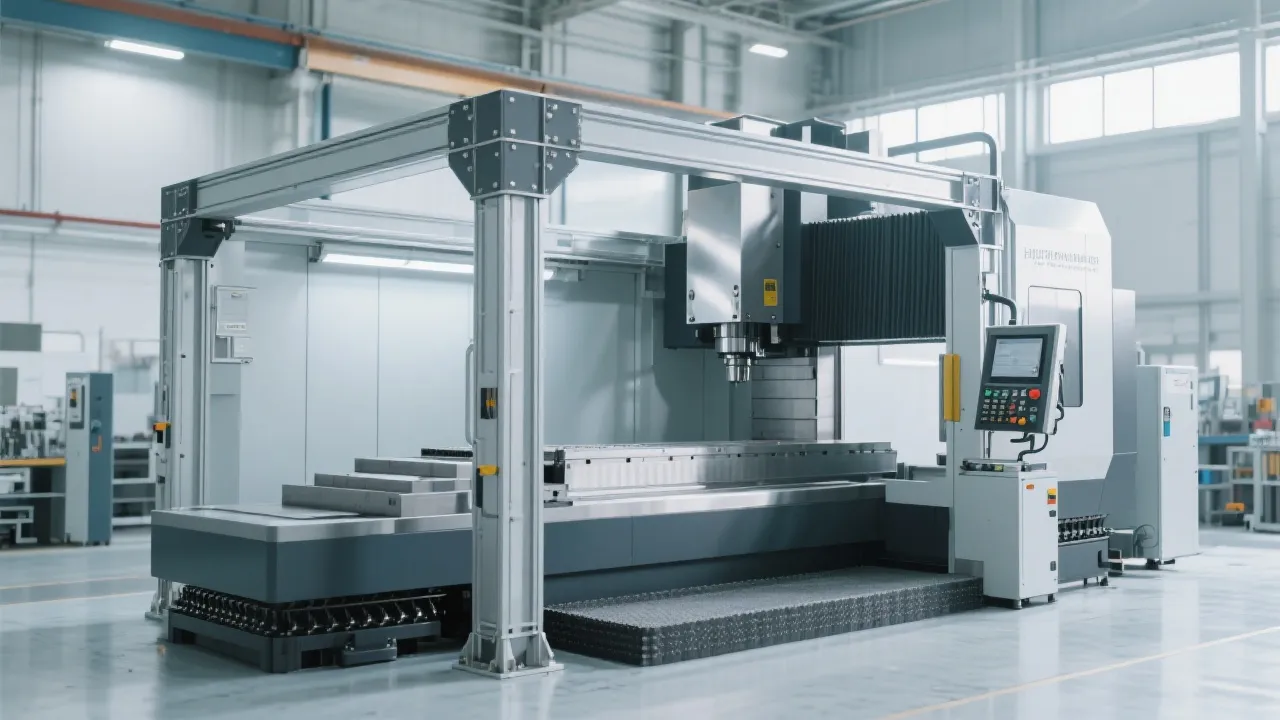
The Kaibo GJ1417 gantry milling machine stands out in the market due to its high stability. It has achieved ISO9001 quality system certification, which is a globally recognized standard for quality management. This certification ensures that every aspect of the machine's production process, from design to manufacturing, adheres to strict quality control measures. Moreover, the machine undergoes over 70 in - factory inspections before leaving the production line. These inspections cover a wide range of aspects, including mechanical performance, electrical systems, and control accuracy.
The logical closed - loop formed by ISO9001 certification and the 70 - item inspection standard provides a reliable guarantee for the machine's stability. Each inspection item is carefully designed to identify and eliminate potential problems, ensuring that the machine can operate continuously and stably in various industrial scenarios.
Let's take a look at a real - world example. A mold manufacturing company was struggling with high machine downtime due to the complexity of processing stainless steel and other difficult - to - cut materials. Their monthly average downtime was approximately 12 hours, which significantly affected their production efficiency and profitability.
After switching to the Kaibo GJ1417 high - stability CNC milling machine, the company witnessed a remarkable improvement. The monthly average downtime was reduced to ≤3 hours. This reduction in downtime not only increased the machine's available operating time but also improved the overall production capacity of the factory. The company was able to meet customer orders more promptly, enhancing its competitiveness in the market.
In addition to the machine's high stability, Kaibo's after - sales service system plays a crucial role in ensuring continuous production. With 26 service outlets globally and a rapid spare parts dispatch mechanism, the company can provide timely support to overseas customers.
In case of machine malfunctions, the service team can quickly respond and dispatch spare parts to the customer's location. This rapid response time minimizes the impact of machine breakdowns on production. For example, in most cases, the service team can reach the customer's site within 48 hours, and spare parts can be delivered within 72 hours.
From a long - term investment perspective, choosing a high - stability CNC milling machine like the Kaibo GJ1417 is a wise decision. High stability means continuous production, which directly translates into increased productivity. Moreover, by reducing unplanned downtime, companies can save on maintenance costs and lost production opportunities.
In addition, stable equipment performance helps build brand trust among customers. When a company can consistently deliver high - quality products on time, it enhances its reputation in the market, leading to more business opportunities and long - term growth.
If you want to learn more about how the Kaibo GJ1417 can help your overseas manufacturing plant reduce downtime and improve productivity, click here to explore the technical details.